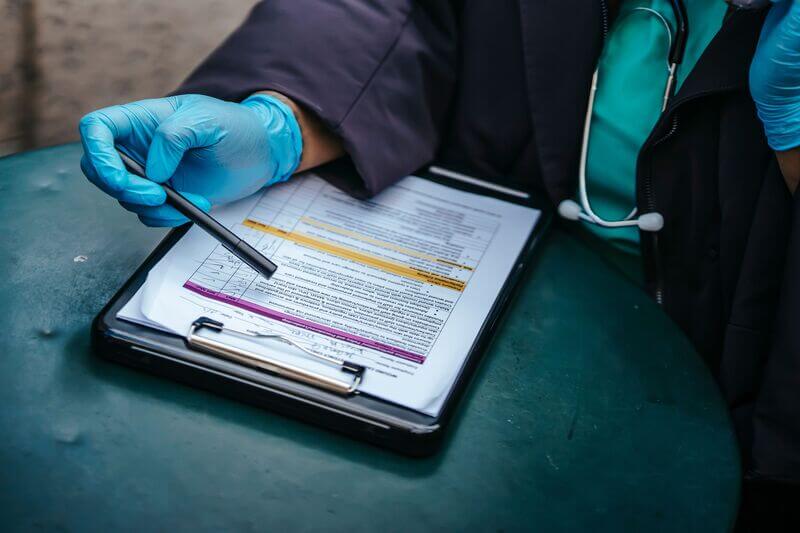
Most care homes are good at the first half of incident reporting: something happens, someone writes it down. Fewer are good at the second half, what happens to that report afterwards. A form gets completed and saved to a folder, and nobody circles back a month later to check whether the same resident has fallen twice, or whether three different caregivers have each logged a near miss with the same piece of equipment. The report exists. The pattern inside it does not get seen.
A good incident report needs to capture more than most homes realise.
- What was observed, not what is assumed. "Resident found on the floor near the bed" is a fact. "Resident fell out of bed" is a guess dressed up as one, and the difference matters when someone reviews the report later.
- Who was involved and who responded. Name everyone, along with the time, so the sequence of events can be reconstructed later if anyone asks, including the resident's family. Not to assign blame.
- Evidence, not just description. A photo of the area, where appropriate and taken with consent, tells a reviewer more in one frame than three paragraphs of description.
- The follow-up: a named owner, a date, and an action. Without it, the report is a record of something that happened. With it, the report becomes part of preventing the next one.
The follow-up gets skipped for a simple reason: filing the report is one person's job for five minutes, and following up on it is nobody's job at all unless a manager builds that step deliberately into a weekly routine. It is made worse by the paperwork itself: one form for a fall, a different form for a medication near miss, a third for a skin concern, and on paper nothing connects them. A resident who has had two falls and one near miss in the same fortnight looks like three unrelated events, because the forms were never designed to sit next to each other. A near miss is the cheapest lesson a care home can learn, costing nothing except the discomfort of writing it down, but most homes have nowhere obvious to record one, so it gets mentioned verbally at handover and forgotten by the next shift.
Good incident management day to day looks like this.
- One category system everyone actually uses. Falls, medication, skin, behavioural, safeguarding, and equipment, all logged the same way, so patterns across categories become visible instead of buried.
- A living stat view, not a filing cabinet. Counts by category, by resident, and by week: something a manager can glance at on a Monday morning and ask a useful question about.
- Alerts for repeated patterns. Two falls for the same resident inside 14 days should trigger a flag automatically, not wait for a manager to notice by chance.
- A monthly review, not just a quarterly one. Thirty minutes a month, looking specifically at the last four weeks: what repeated, what was resolved, what still needs an action.
In our 2025-26 survey of UK care home managers, falls risk was one of the clearest signals in the entire dataset: 9 in 9 said early warning alerts for falls risk would be useful to them, 8 in 9 said the same for infection or illness outbreaks, and 9 in 9 wanted early warnings for changes in resident wellbeing, appetite, mood, and engagement. None of these are dramatic events on their own. A skipped meal. A slightly slower walk to the dining room. A near miss with a hoist. Each one alone looks small. Together, over a week or two, they tell a different story, which is the argument for a system that watches for the pattern rather than one that only records the event.
One honest caveat: a category system and an automatic flag can surface that a pattern exists. They cannot tell you why it is happening, or what to do about it. That part is still a person's job, usually the nurse or manager who knows the resident. What the system removes is the risk of the pattern going unnoticed in the first place, not the judgement needed once it has been noticed.
A simple starting point this month: pick one incident category (falls is usually the highest volume) and pull every report from the last 90 days. Look for repeats, same resident, same time of day, same location. Assign one person to own the follow-up for whatever pattern you find, and review it again in four weeks. That is the whole exercise, and most homes have never actually done it.
Falls and infections are the categories with the clearest data behind them, but the same structural gap shows up in medication errors and in the paperwork that slows down every shift. Different forms, same missing follow-up.
Frequently asked questions
Do near misses need to be logged the same way as full incidents?
Yes, using the same categories and the same level of detail. A near miss that never happened is exactly the kind of thing that stops a real incident from happening later, but only if it gets written down properly rather than mentioned in passing.
How do we know if our incident reporting is actually working?
Three signs. Near misses get logged, not just full incidents. The same pattern does not repeat three times before someone notices. And a monthly review actually happens, rather than being the first thing skipped when the home gets busy.